
Inflation Holds at 2.4%—But Geopolitical Risks Loom
Consumer prices rose **2.4%** year-over-year in February 2026, matching January's figure and market expectations. This marks a period of stability, yet external shocks, notably the conflict with Iran, threaten to disrupt this fragile equilibrium.
The Big Picture
For the second consecutive month, the U.S. annual inflation rate registered 2.4% in February 2026, consistent with January's figures. This stability, widely anticipated by analysts, suggests a period where inflationary pressures have ostensibly steadied after years of volatility. However, relying solely on this number without examining underlying currents and external shocks is a misstep. While the monthly annual rate has seen a general deceleration since its 2022 peaks, the current geopolitical landscape introduces significant uncertainty, challenging any simplistic interpretation of a "stable" 2.4%.What's Moving
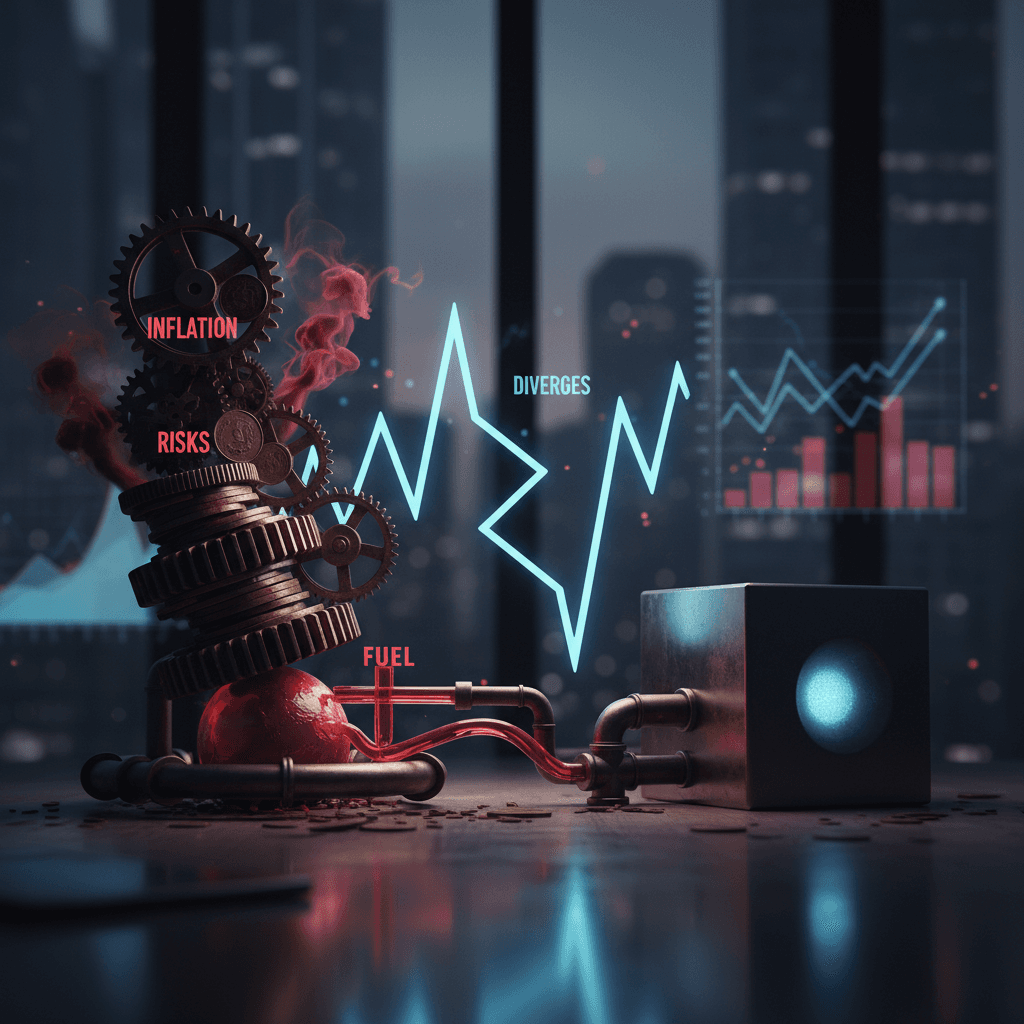
The most critical factor overshadowing the stable 2.4% inflation rate is the broader geopolitical environment. Reports indicate that inflation "had steadied before War With Iran," implying the current conflict is a nascent, significant variable. This new reality demands scrutiny. While February's data reflects pre-escalation or early-stage impacts, future reports will undoubtedly capture the fallout. We expect potential disruptions to global supply chains and commodity markets, particularly energy and agriculture, which could rapidly re-ignite price pressures. The Economic Research Service's focus on "Food Prices and Spending" becomes especially pertinent here; any sustained conflict could lead to spikes in essential goods, directly impacting household budgets.Furthermore, the Peterson Institute for International Economics warns of "the risk of higher US inflation in 2026." This isn't merely academic conjecture; it's a data-driven forecast that aligns with our skepticism regarding the longevity of the current 2.4% rate. The market's expectation of stability has been met, but expectations can shift rapidly when faced with actual supply shocks or sustained elevated energy costs stemming from global instability. Companies must be prepared for potential input cost volatility, regardless of recent headline stability.

The Bottom Line
The 2.4% inflation rate is a deceptive calm. While it signals a momentary pause, the escalating geopolitical situation, particularly the conflict with Iran, represents a clear and present danger to price stability. Businesses and consumers must look beyond the headline number and brace for potential inflationary pressures driven by supply chain disruptions and commodity price surges. Prudent action now means stress-testing budgets against higher input costs and preparing for renewed volatility.
Get Tomorrow's Layoff Briefing Today
AI displacement data, hiring signals, and Spotlight job leads — in your inbox every morning.
Track every layoff in real time
See which companies are cutting, how many jobs are affected, and whether AI is the cause.
Related Reading


Daily briefing — free